





.png&w=3840&q=75)
.png&w=3840&q=75)
.png&w=3840&q=75)





.png&w=828&q=75)
.png&w=828&q=75)
.png&w=828&q=75)

関連記事
プロフィール
“Independence”
When Sun, the CEO of Miraizu, asked, “What kind of talent are you looking for?” three representatives from the Okinawa Institute of Science and Technology (OIST) answered in unison:
Because OIST provides both a cutting-edge research environment and ample funding, students are constantly asked, “So, what will you do?”
Students who can answer this question on their own are welcomed, while those who wait for instructions are not a good fit—this is the culture at OIST.
About Okinawa Institute of Science and Technology (OIST)
Founded in 2011, OIST is still a young graduate university. Yet, it ranked 9th globally in the 2019 Nature Index normalized ranking, surpassing the University of Tokyo. On its international campus, cutting-edge research is conducted across diverse fields, including physics, life sciences, AI, and marine science, establishing OIST as a “graduate university from Okinawa attracting global attention.”
OIST is operated as a university corporation under the Cabinet Office, rather than the Ministry of Education, Culture, Sports, Science and Technology, giving it unique flexibility that extends beyond academia, including startup support.
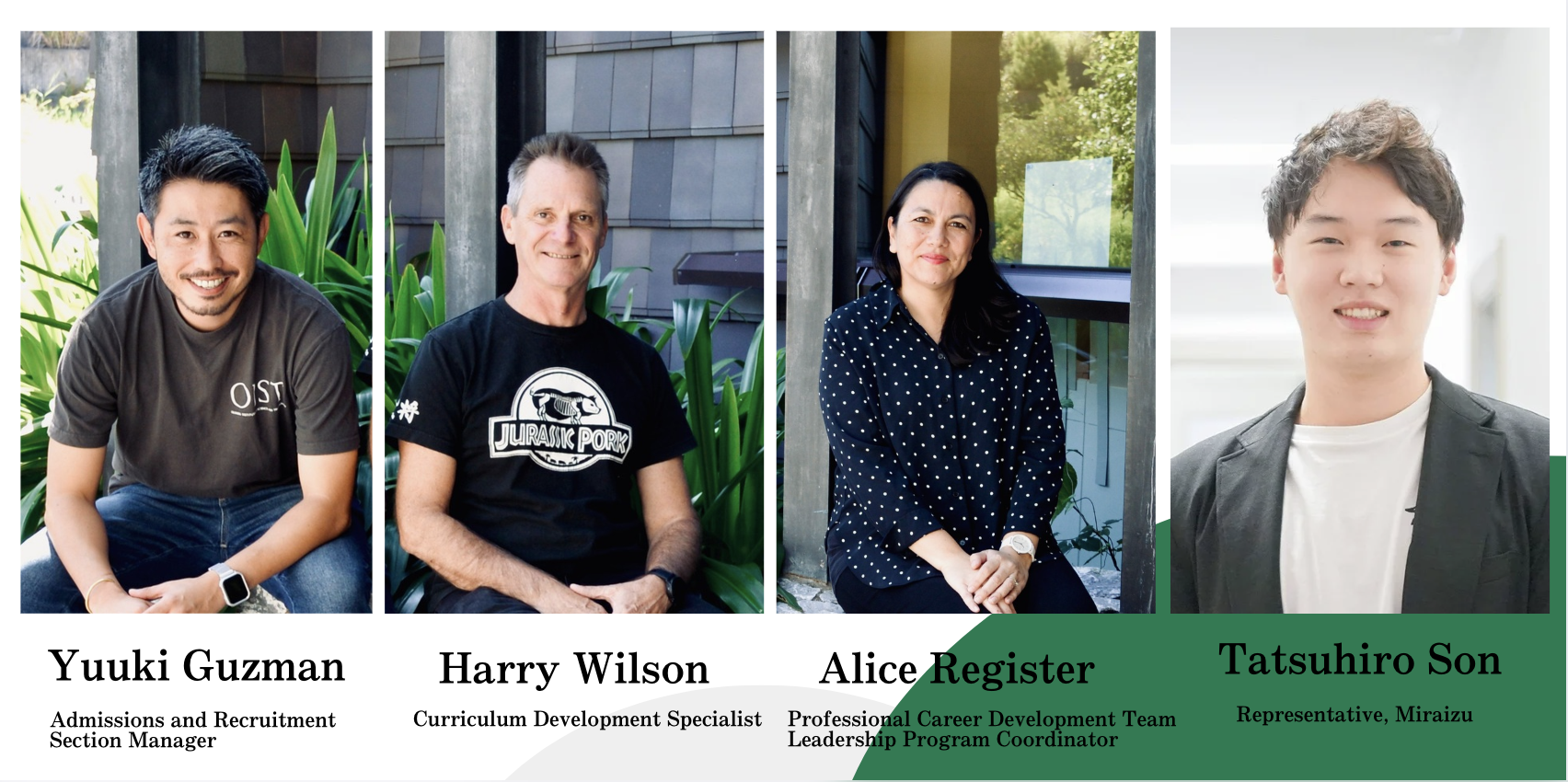
Why does this graduate university in Okinawa have such strength? To find out, Sun visited OIST in person. He spoke with Harry Wilson, Yuki Guzman, Alice Register from the Graduate School Dean’s Office, and intern Rina Keboko.
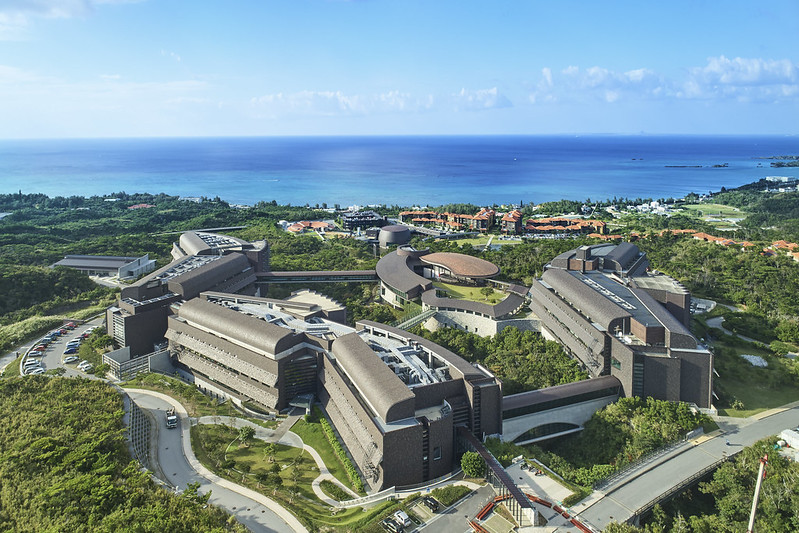
Why Okinawa!?
Son: Tokyo might be a more exciting place for young people. But what is the “advantage of being in Okinawa” for OIST?
Guzman: The biggest advantage is that there’s “nothing.” That’s why there’s no noise, and you can focus on research. The Cabinet Office sometimes asks, “Why do professors want to work at OIST?” It’s hard to replicate this model elsewhere. Okinawa has an international perspective shaped by trade during the Ryukyu Kingdom era, and with the presence of U.S. military bases, it has developed a culture that is open to foreigners. I’m from Yamaguchi, and creating the same system there would be difficult. For overseas researchers, it’s easy to adapt and work without friction with locals. Also, OIST only offers doctoral programs—no undergraduate or master’s programs—so there’s no distraction from undergraduates’ job hunting. Everyone can focus on research, which is a major strength.
Register: The natural environment is also a strength. Okinawa is a treasure trove of biodiversity, which itself becomes a research resource.
Son: I see. I’d like to hear about students’ real daily lives as well.
Keboshi: I usually focus on research, but sometimes go out to eat with lab mates or visit remote islands on weekends. Yesterday, I went to Ishigaki Island (laughs). Many people visit such places on holidays, but I live here. Thinking that way, it feels like a really luxurious environment.
Can Japanese students handle research in English?
Son: At OIST, only 20% of students are Japanese, and both research and daily life are basically conducted in English. What type of Japanese students fit in here?
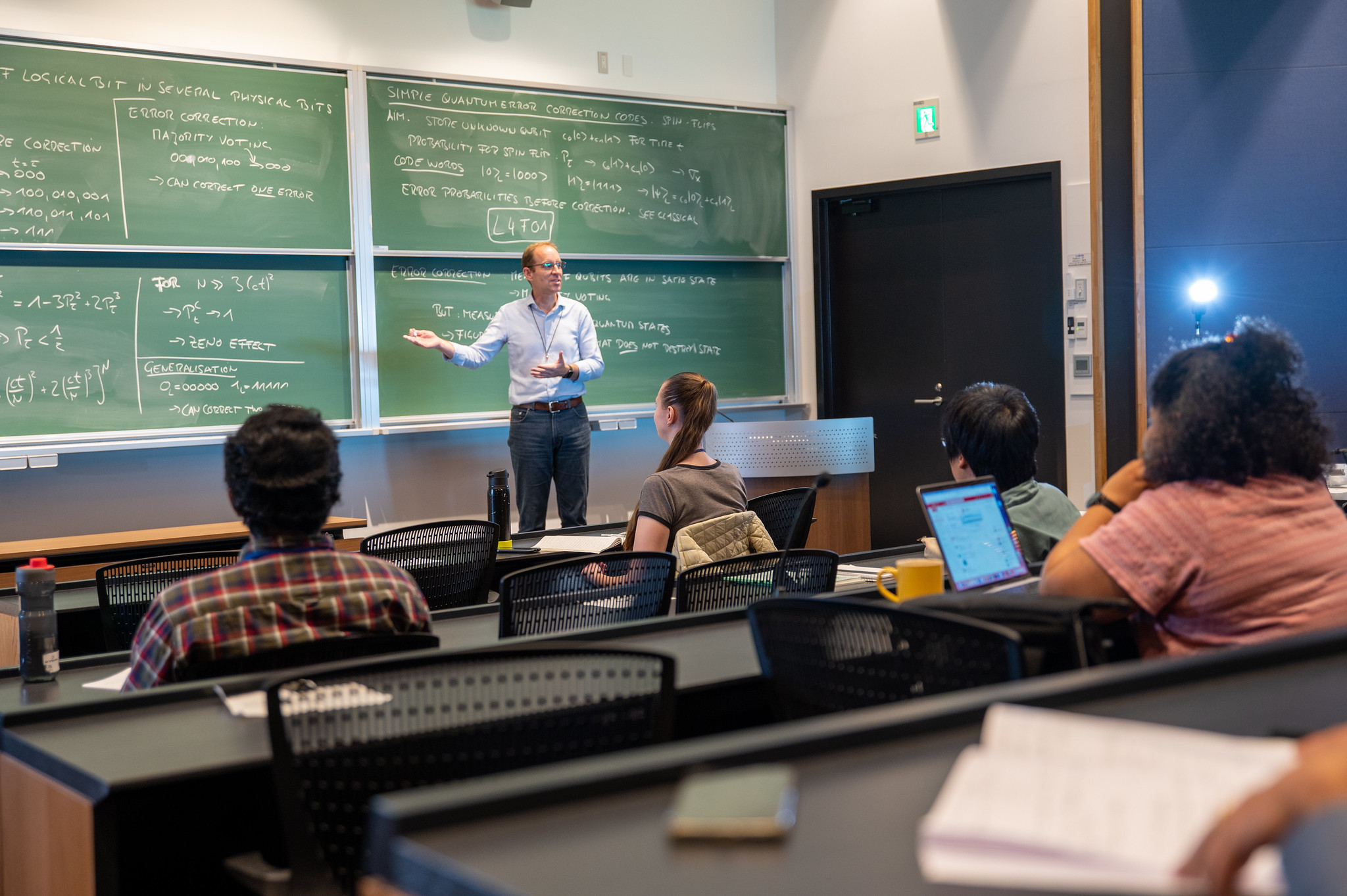
Guzman: Students who have independence and ideas, and can say, “I want to do research using this resource,” are the right fit, rather than those waiting for guidance. OIST has state-of-the-art tools and facilities, so the question is always, “So, what will you do?” Some guidance is given, but independent thinkers are essential.
Keboshi: Interns have no classes and aren’t given pre-defined tasks. You have to formulate your own research questions and focus on them intensely.
.jpg)
Son: But independence is hard to measure. There are probably many students with no research achievements but genuine interest.
Guzman: That’s why we focus on “matching.” OIST has about 100 faculty and 300 students. Even the most talented students cannot advance if they don’t match well with their advisors. To prevent dropout, we carefully review applicants’ themes, achievements, and compatibility with advisors before enrollment. With only doctoral programs, there’s no “noise” from undergraduate job hunting, so everyone can focus on research.
The international ratio that supports OIST
Son: Many universities struggle to attract international students. Why does OIST, on the contrary, have more foreign students?
Wilson: The biggest difference is infrastructure. Many universities struggle here, but OIST thoroughly supports daily life. For example, the university helps with everyday procedures that can be difficult for many foreigners, like buying a car or paying utility bills. In addition, students receive roughly 3 million yen per year, including tuition support, and the research facilities are fully equipped, allowing them to focus entirely on research. This environment is highly attractive to foreigners, which is why about 88% of students are international and 20% Japanese.
Son: Support is key. Some worry about Japanese students’ English ability—how is it in reality?
Wilson: Most students are non-native English speakers; native speakers are actually the minority. Basic communication is sufficient, and what matters most is dedication to science. English is the common language of science, but not everyone is fluent. Many students conduct research using imperfect English. OIST thus functions as a “bridge between Japan and the world.” Japanese students who complete doctoral programs in English often succeed abroad, while international students sometimes stay in Japan and build careers in academia or industry.
Guzman: Therefore, OIST looks for “students who can take on research globally,” not “fluent English speakers.” Not a single student has ever dropped out due to language. Spending five years on campus naturally builds English skills.
Son: So ultimately, what matters is not language proficiency itself, but attitude toward research and independence.
Challenges faced
Son: What challenges do people at OIST feel?
Guzman: One challenge is the small number of Japanese students. Even if students are interested in OIST, they face the barrier of “convincing their parents.” Many parents would ask, “Why OIST when you could go to the University of Tokyo?” But it’s important to create an environment where students truly want to be here. We need to communicate more about OIST’s research environment and access advantages.
Are doctoral degrees in science “not cost-effective”?
Son: Students sometimes tell me, “Science PhDs are not cost-effective.” From a parent’s perspective, even if a child is interested in science, they often advise, “Get a bachelor’s and join a bank or trading company.”
But isn’t that the real problem? It’s necessary to show that “these career paths are possible with a doctoral degree.”
Guzman: We strongly feel the same. OIST has a compulsory course called PCD (Professional Career Development), supporting doctoral students’ career paths beyond becoming researchers.
Register: Japanese society as a whole needs PhD-level talent. Parents may worry, but demand exists. We try to help high school students envision a future with a PhD. A PhD does not limit someone to research—it proves abilities that cannot be gained with just a master’s.
For example—perseverance to complete a five-year project, critical thinking, international communication skills, and cultural sensitivity. These are valuable to companies. Skills gained during doctoral programs can be applied across society.
Wilson: The demand is reflected in inquiries to OIST. This year’s career fair had over 16 companies meet with students, showing strong interest in PhD talent. The era of “PhD = path to university professor” is over; cutting-edge research is increasingly in industry, including companies like Google and Microsoft. The Japanese government aims to triple PhD talent by 2040, but the issue is how proactively companies will hire them.
An intern’s perspective: life at OIST
Son: How many students actually do internships at OIST? Are they enjoying it?
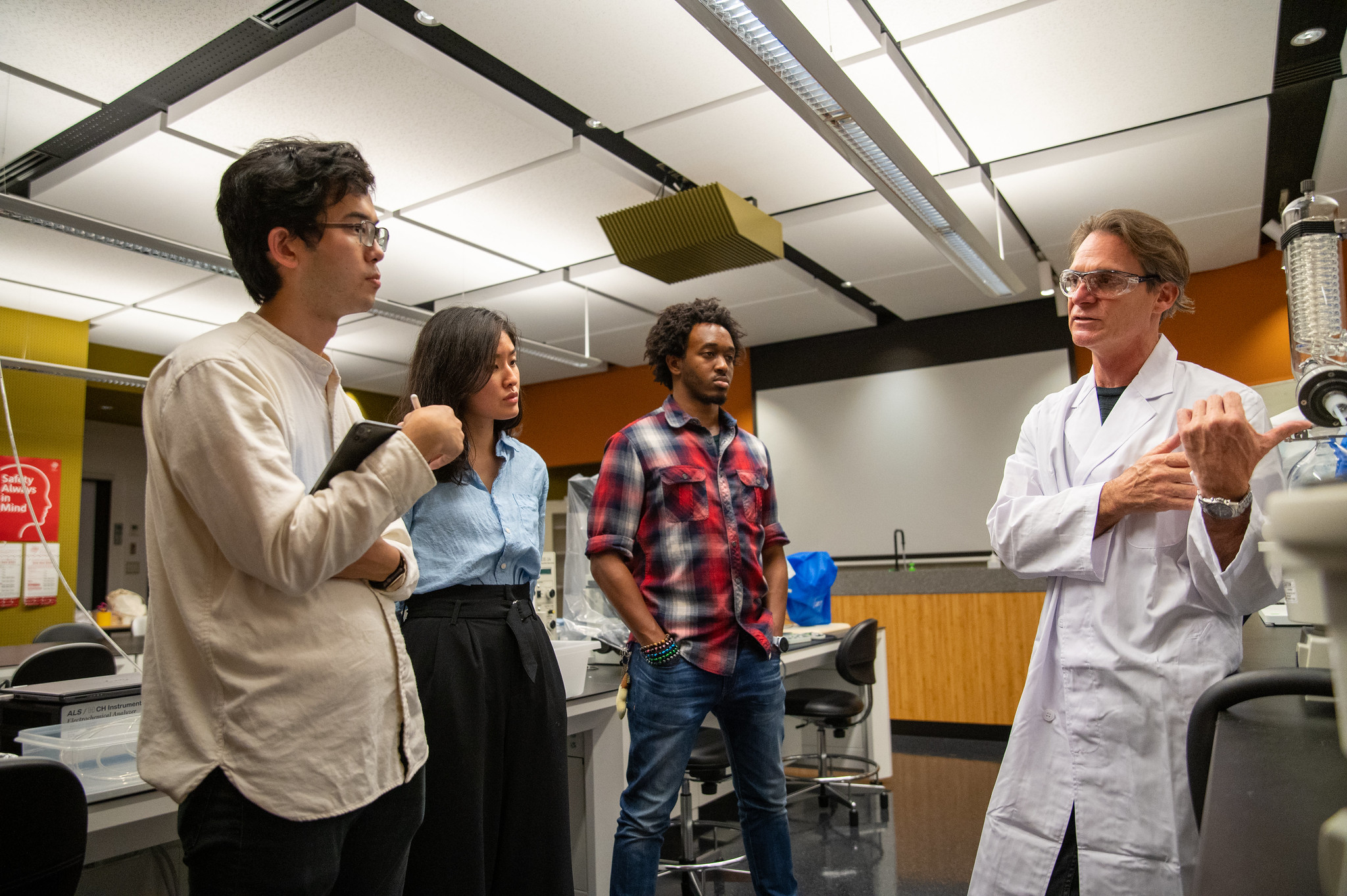
Keboko: I’ve been here for four months, and it’s been really fun. Honestly, I don’t want to leave. The environment allows me to fully dedicate myself to research, handling marine organisms and environmental data. I analyze insects living in rivers, though I didn’t know the methods at first. Learning new things and gradually being able to do more is extremely enjoyable.
Son: What accelerates learning during your internship?
Keboko: Mainly that there are no classes. I can focus solely on research. I meet one-on-one with my advisor weekly to review progress, and spend the rest of the week fully immersed in research, clarifying achievements and challenges. Advisors also propose achievable six-month projects suited to my level. This environment allows me to experience new discoveries and growth daily.
A message from OIST
Son: Finally, what would you like to convey to parents, applicants, and future researchers?
Guzman: First, every perspective is valuable, regardless of background. Unique perspectives from growing up outside major cities are assets in research.
Register: We want students who have a strong desire to come to OIST, even if opposed by others. Convincing parents may be difficult, but here, students can fully immerse themselves in research. We fully support students in forging their own paths.
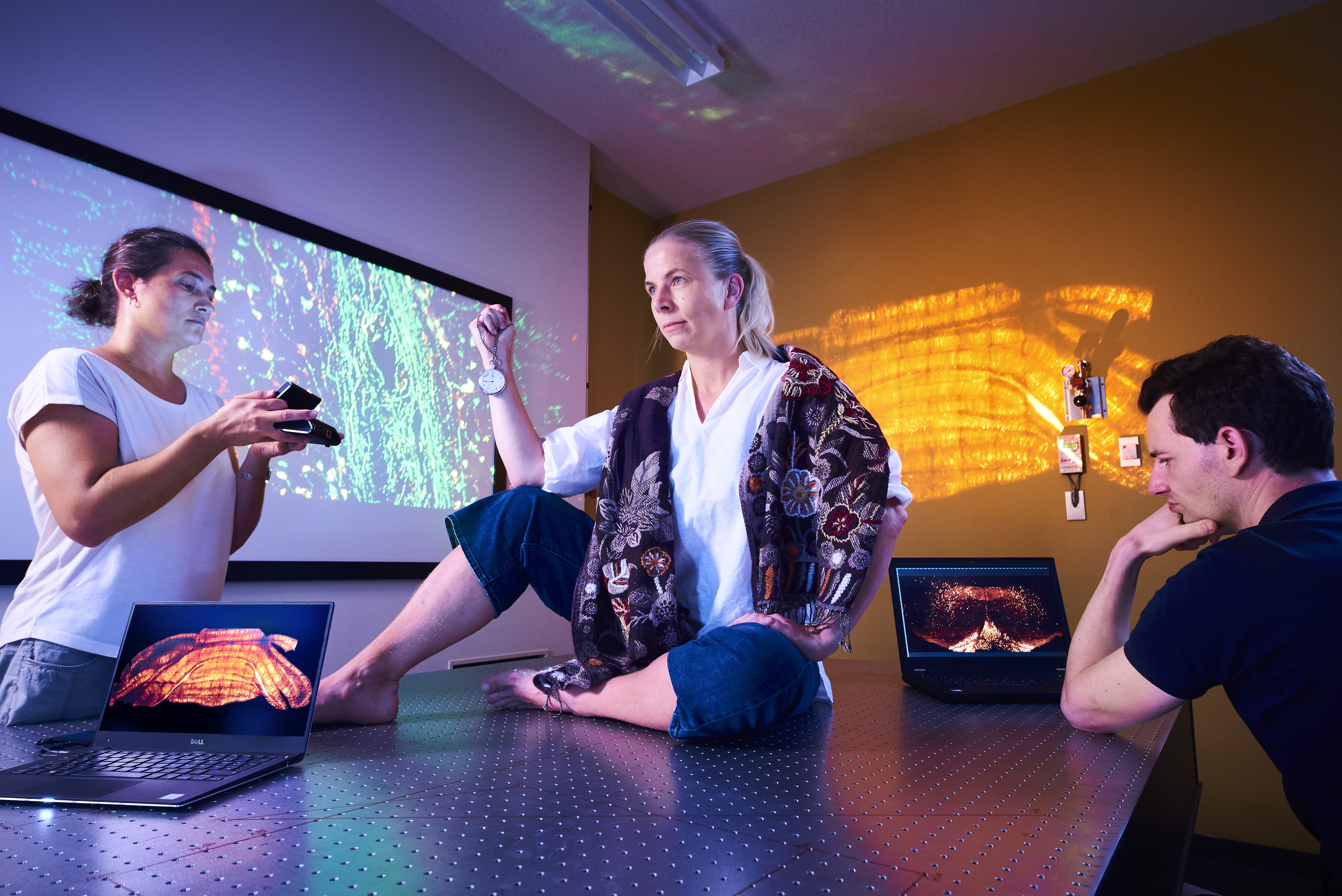
At OIST, students select their research themes and independently run projects—a rare experience at large universities. For students serious about research, this is a major opportunity.
Can Japan nurture students fit for OIST?
Can Japan cultivate Japanese students capable of thriving at OIST?
Educators inevitably ask, “Can Japan’s education system produce talent ready for OIST?”
Currently, about 70% of young people who complete the Japanese education system would struggle at OIST. It’s not a pampering university; it requires strong independence and a self-driven research mindset in addition to academic ability. Breaking away from an “academics-only” focus, how can we cultivate “independent talent”? Visiting OIST made me acutely aware that this is a challenge we must take seriously.
In the next installment, we will delve deeper into “life at OIST” from the perspective of intern Rina Keboko.